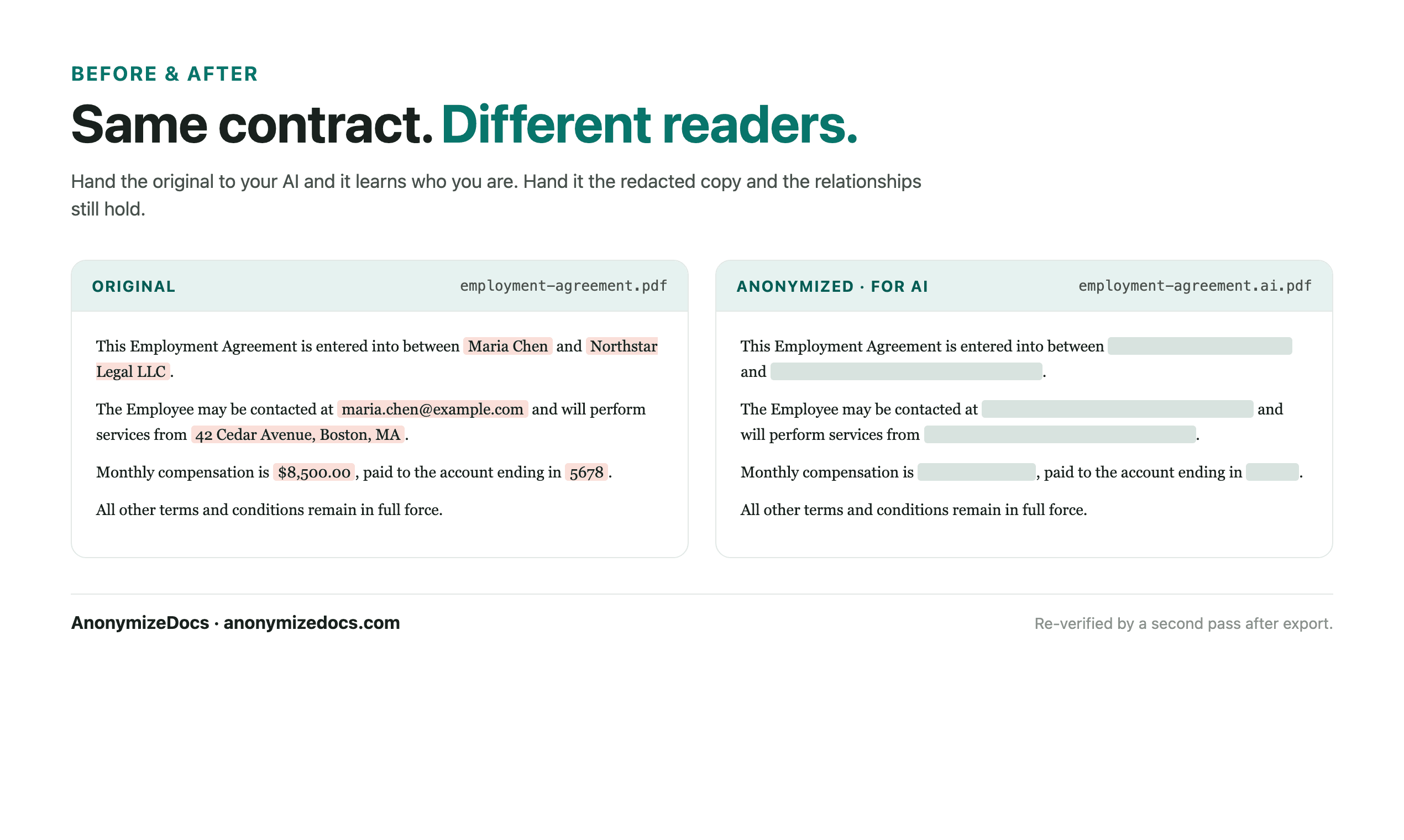
Immigration paperwork is packed with passport numbers, case references and personal details. AI can help draft or explain forms, but the original identifiers should not leave the applicant's device.
Workflow
1. Select the document locally
Choose the PDF or DOCX from your device. The file stays in the browser.
2. Review personal identifiers
Check passport numbers, case numbers, names, addresses and date-of-birth references.
3. Keep form structure readable
Question numbers, section headings and instructions remain visible while identifiers become placeholders.
4. Verify and export
Recheck the output, download the anonymized copy, then use it with the AI tool.
What gets reviewed
- Passport, ID and case numbers
- Names, addresses and date-of-birth references
- Emails, phone numbers and application references
- Custom values you add for a specific application
Stays on this device
- The original immigration document is not uploaded to AnonymizeDocs.
- Extracted text, findings and replacements remain in the browser session.
- Account and purchase data are separate from document content.
Limitations: Immigration filings are legally sensitive; redaction is a preparation step and does not replace qualified immigration advice or final review.
Frequently asked questions
Can AI help draft immigration forms without seeing passport numbers?
Yes. Prepare an anonymized copy first, then use it with the AI tool for drafting help.
Are scanned passport pages handled?
Scanned pages use local OCR and are processed on your device, but they need the same careful review as text.
Is this a substitute for an immigration consultant?
No. It is a document preparation tool, not legal or immigration advice.
Continue exploring
For lawyers
Client documents, contracts and case files prepared for AI without leaving the browser.
Redact a contract
Remove parties, addresses and registration numbers before AI review.
How it works
Select, detect, review and verify — the full local workflow.
Local document workspace