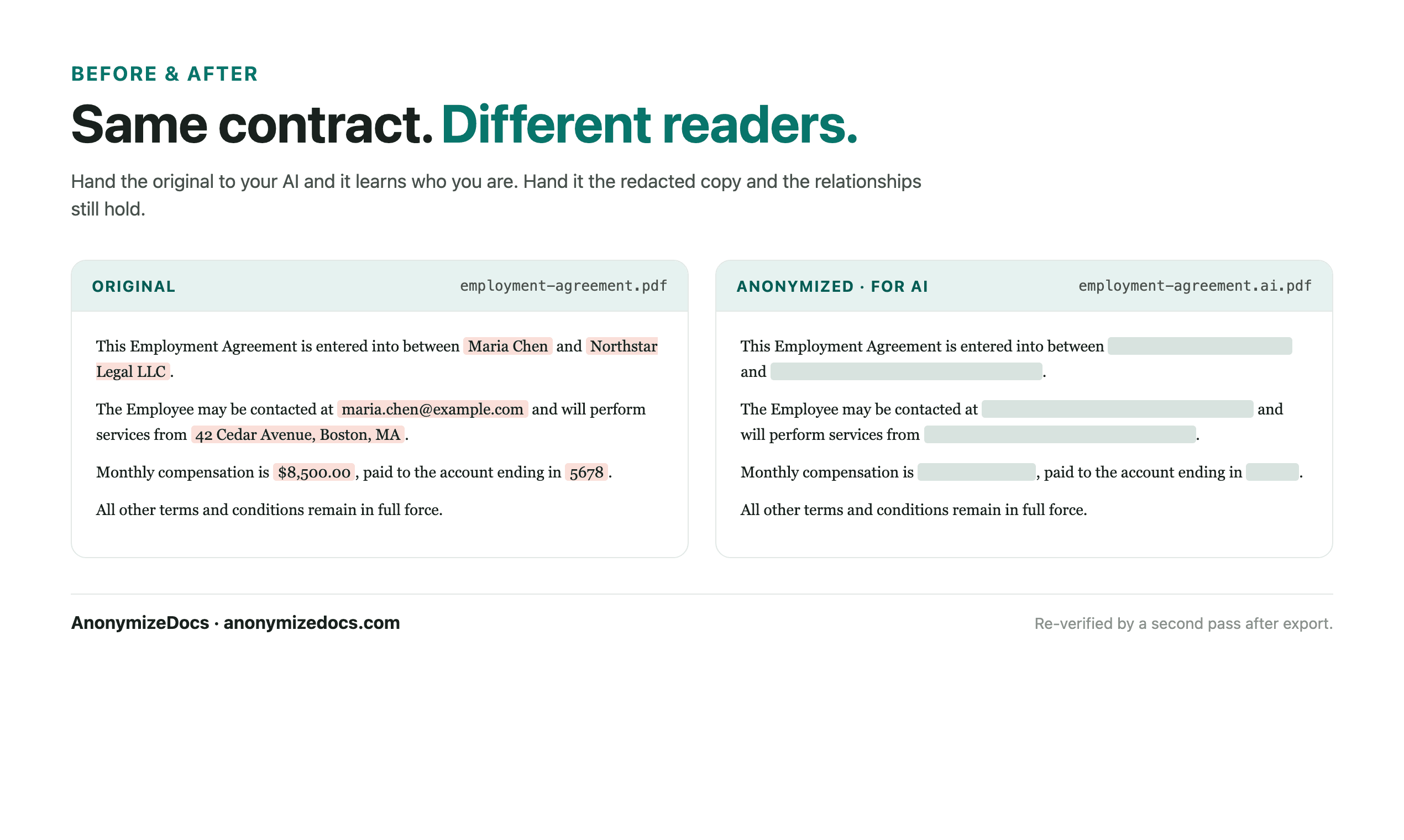
HR records contain employee identities, compensation and personal details that most AI tasks do not need. AnonymizeDocs prepares a reviewed copy that keeps the policy or structure useful without exposing the person.
Workflow
1. Select the HR record locally
Choose the PDF or DOCX from your device. The original stays in the browser.
2. Review employee identifiers
Check names, employee IDs, emails, phones, addresses and compensation references.
3. Keep policies and structure readable
Policy clauses, dates and roles remain visible while personal values become placeholders.
4. Verify and export
Recheck the output, download the anonymized copy, then use it with the AI tool.
What gets reviewed
- Employee names and employee IDs
- Emails, phone numbers and addresses
- Compensation, bank and tax references
- Custom values you add for a specific record
Stays on this device
- The original HR record is not uploaded to AnonymizeDocs.
- Extracted text, findings and replacements remain in the browser session.
- Account and purchase data are separate from document content.
Limitations: HR data is sensitive by nature; redaction is a preparation step and does not replace your organization's privacy, data-protection or legal review.
Frequently asked questions
Can I use AI on HR policies without exposing employees?
Yes. Remove names and identifiers locally first, then ask AI about the remaining policy text.
Does redaction remove compensation details?
Compensation references are detected as findings and can be replaced or kept, depending on your review.
Is this suitable for onboarding documents?
Yes, for preparing reviewed copies. Original records should still be handled under your HR data policies.
Continue exploring
Anonymize resumes
Remove candidate names and contact details before AI screening.
Remove PII before AI
A practical workflow for removing personal details from PDFs and DOCX files.
Security and local processing
See what stays local and what the account stores.
Local document workspace