Focused workflowUpdated Aug 10, 2026

Redact an academic transcript before ChatGPT.

To redact an academic transcript before ChatGPT, select it locally, review the values ChatGPT does not need for the requested task, replace accepted identifiers with consistent placeholders, and verify the exported copy before sharing it with an AI tool.

Local-first Reviewable Verified export

Try it free See the workflow

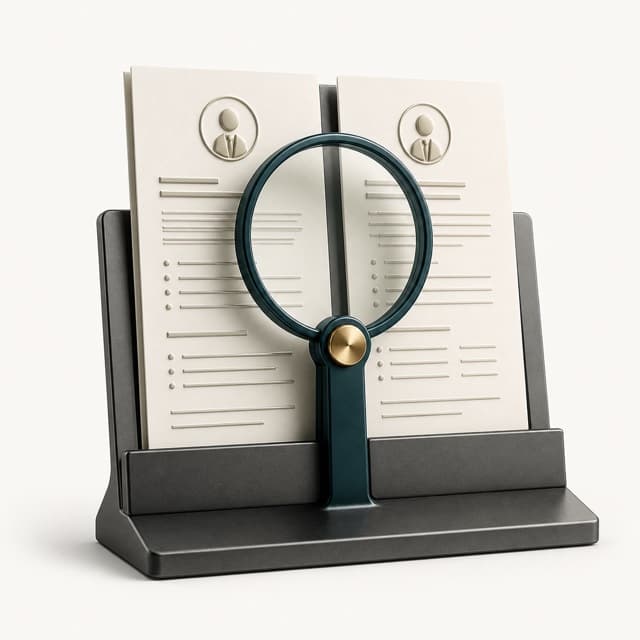
A local academic transcript review workspace before AI analysis. ChatGPT redaction workflow.
Original stays on this device
For admissions teams, students and authorized education reviewers.

Why this workflow matters

Keep the useful context. Remove the unnecessary identity.

An academic transcript can contain student names and identifiers, school names, dates and locations, course tables, grades and registrar details. Prepare a reviewed copy before asking ChatGPT to read, summarize or explain it. The useful context stays readable while unnecessary identity-bearing details are reviewed before export.

The goal is a working copy that still makes sense to an AI tool: relationships stay consistent, while accepted names, contacts, addresses and document-specific identifiers become controlled replacements.
A practical sequence

From original file to AI-ready copy.

Four checkpoints
01

Select the document locally

Choose an academic transcript from your device. The original stays in the browser while its supported text and image content are prepared for review.

02

Define the AI task

Write down the output you need: the values ChatGPT does not need for the requested task. This keeps the review focused on useful context instead of removing facts blindly.

03

Review document-specific findings

Check student names and identifiers, school names, dates and locations, course tables, grades and registrar details, then add any unique value that the detector cannot know from the document type alone.

04

Verify before sharing

Upload only the verified copy and keep the original file separate. Dense grade tables, seals and registrar signatures deserve a visual check.

Document-specific review

What gets checked before export?

The detector suggests candidates; you decide what changes. For this workflow, start with the fields below and add custom findings when the document contains a unique name, project, matter or identifier.

Document-specific: student names and identifiers Document-specific: school names, dates and locations Document-specific: course tables, grades and registrar details ChatGPT upload surface: remove names, contacts, account details and unique references Custom values you add for this document

Privacy boundary

What stays on your device.

  • The original document is not uploaded to AnonymizeDocs.
  • Extracted text, findings and replacements remain in the browser session.
  • This page's ChatGPT redaction guidance is a preparation workflow, not a confidentiality guarantee.

Human checkpoint

What still needs your judgment.

Redaction reduces unnecessary exposure but does not change ChatGPT account controls or guarantee confidentiality. Dense grade tables, seals and registrar signatures deserve a visual check. Keep the original file unchanged and follow the policies that apply to the document owner.

A verified export confirms accepted values were handled. It does not promise that an automated detector found every sensitive detail.

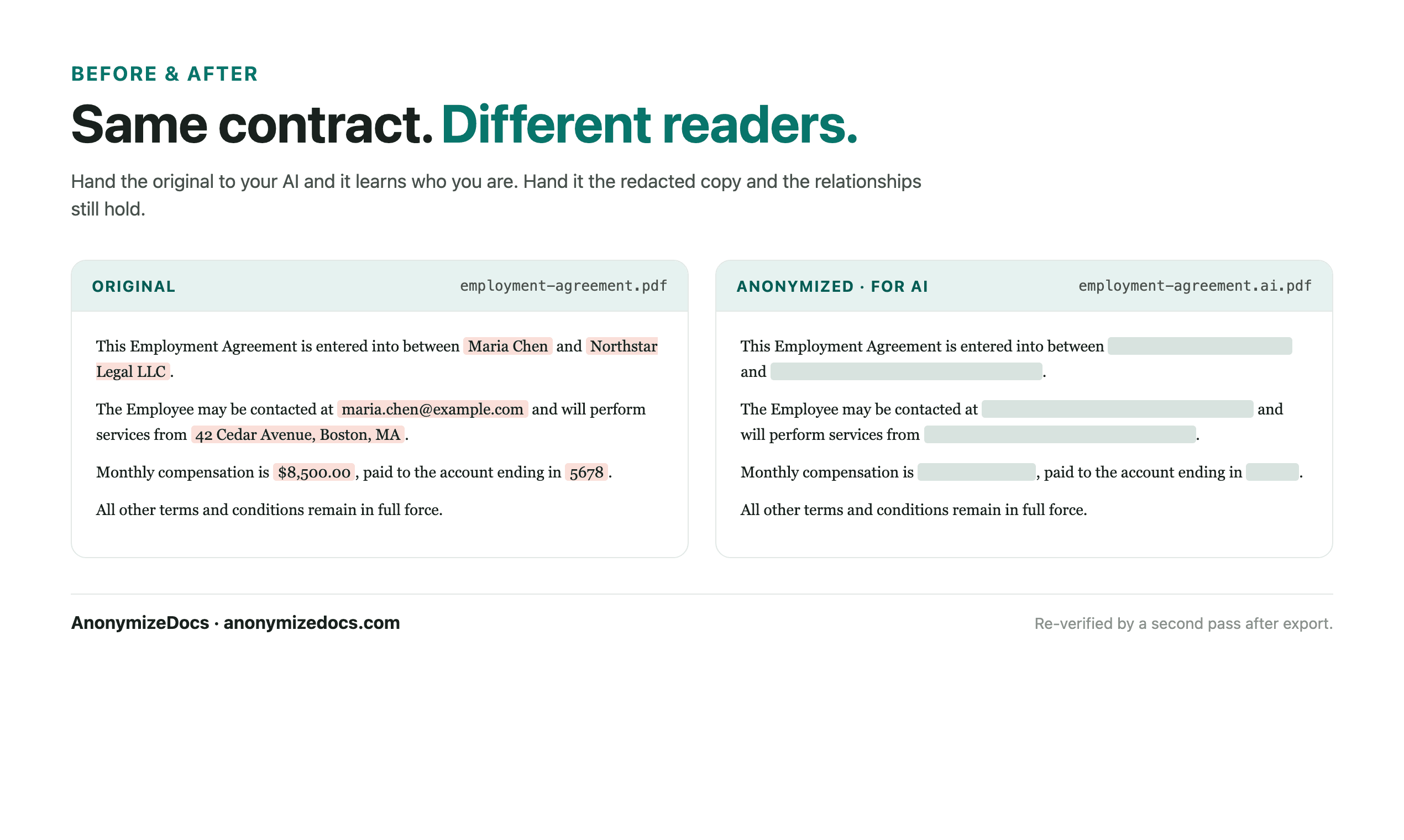
Illustrative before-and-after document preparation workflow

What a useful output looks like

Readable enough for analysis. Safer to share.

Stable placeholders let the AI distinguish one party from another without receiving the original names. Keep the clauses, dates and relationships the task needs; replace the details that identify the people, companies or matter.

Original identity-bearing valuesReview accept, ignore or editOutput reviewed placeholders or permanent redaction mode

Before you share the copy

Questions people ask about this workflow.

Can I redact an academic transcript before ChatGPT without uploading the original?

Yes. Keep the original local, review proposed replacements, verify the export and send only the copy you chose to ChatGPT.

What should I review in an academic transcript before AI analysis?

Start with student names and identifiers, school names, dates and locations, course tables, grades and registrar details. Then check headers, footers, tables, images, filenames and unusual combinations of facts that could identify a person or matter.

Does this make an academic transcript anonymous?

No. It reduces unnecessary identifiers and gives you a reviewed copy. You remain responsible for deciding what can be shared and for checking the final output.

Continue with the right depth

Related workflows and guidance.

Local document workspace

Review your next file in the browser.

Keep the original local, make the decisions yourself, and export a copy you can inspect.

Try it free